
With tool diameters starting at 32 mm (1.25″), Century Wireline offers an economical way to log small-diameter boreholes without compromising data quality. Our systems collect measurements as low as every 1mm, delivering dense, detailed records. Meticulous tool construction and precision calibration guarantee the highest standards of data integrity.
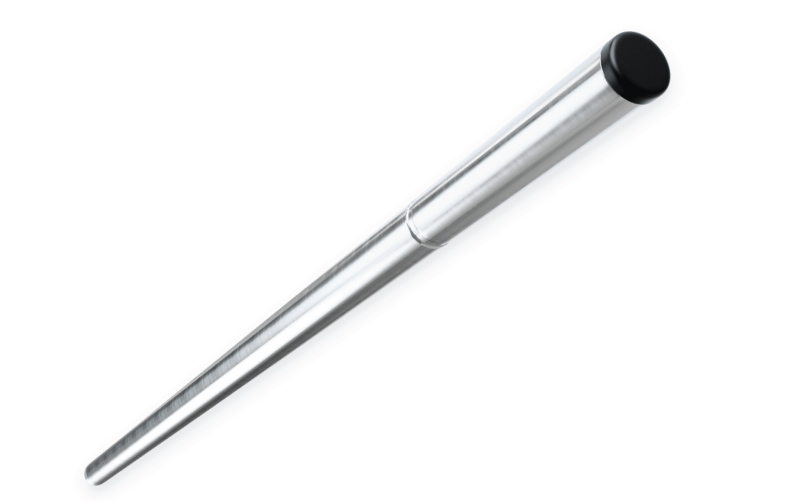
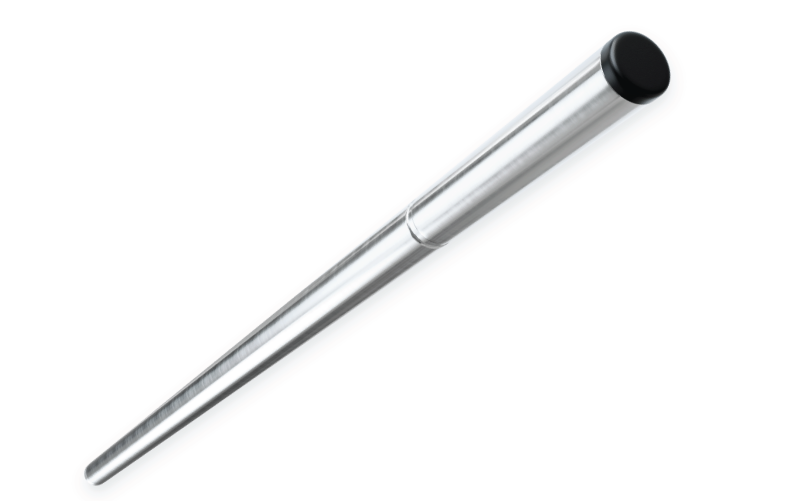
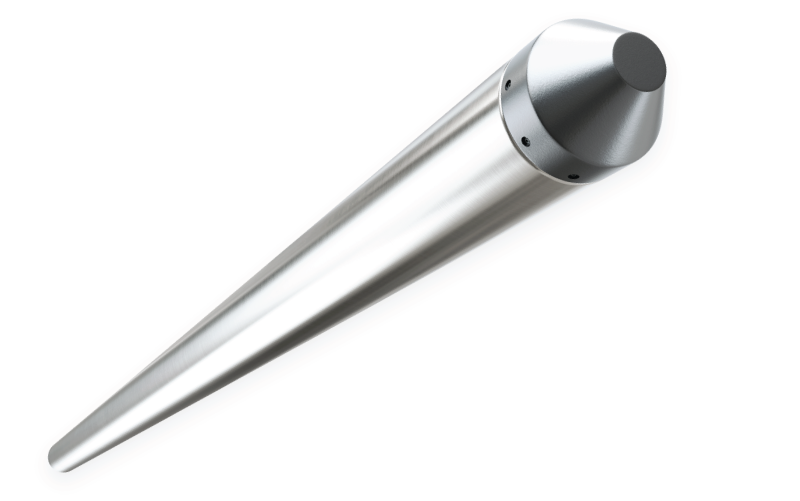
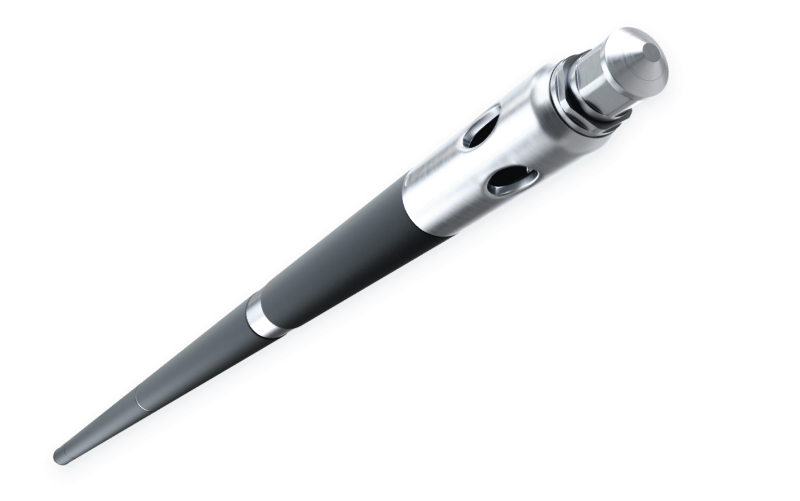

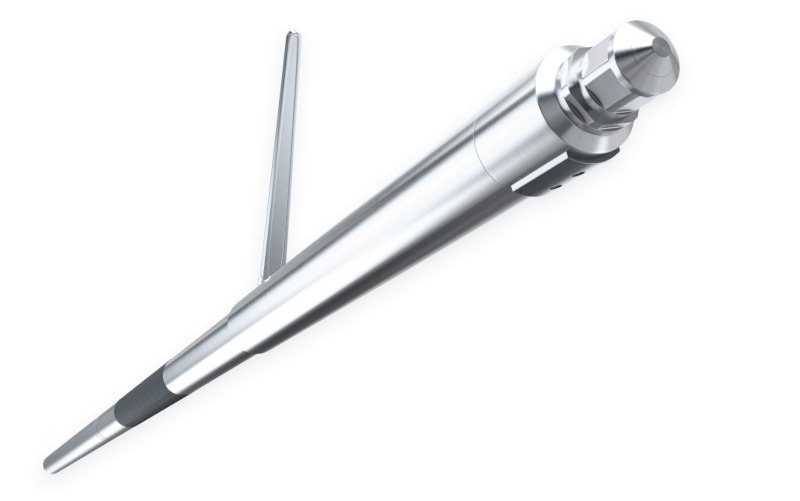
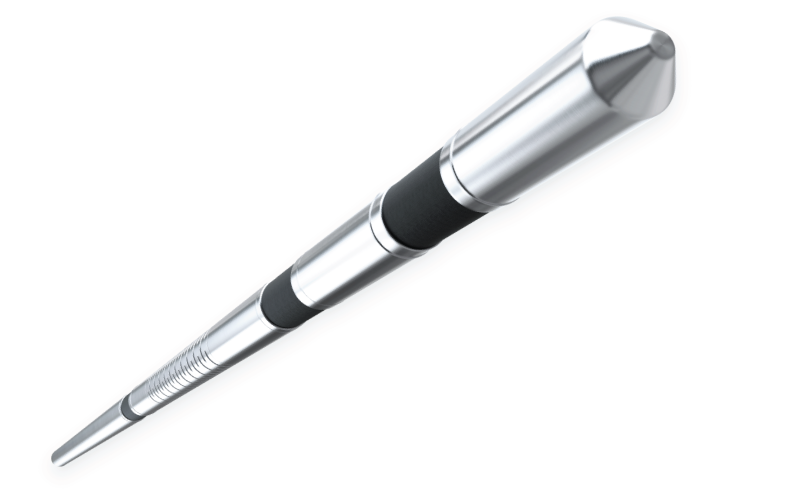
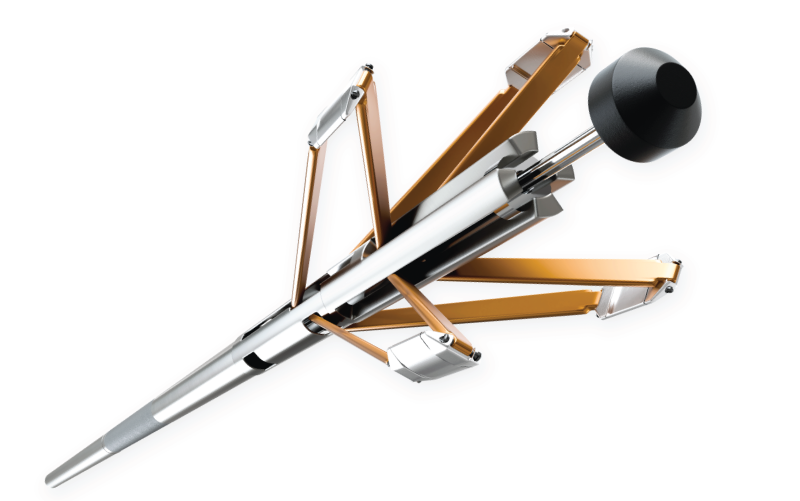
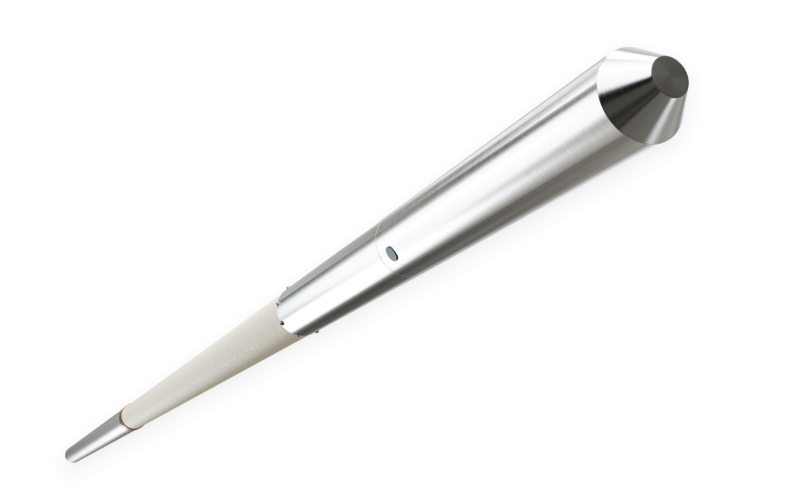
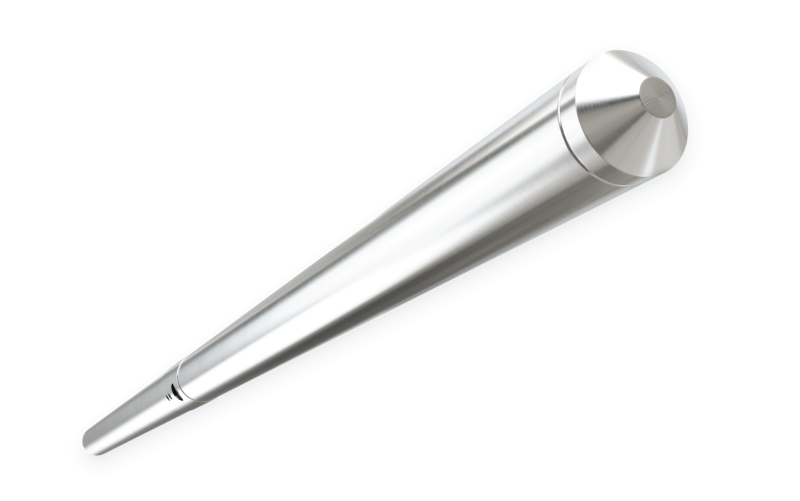
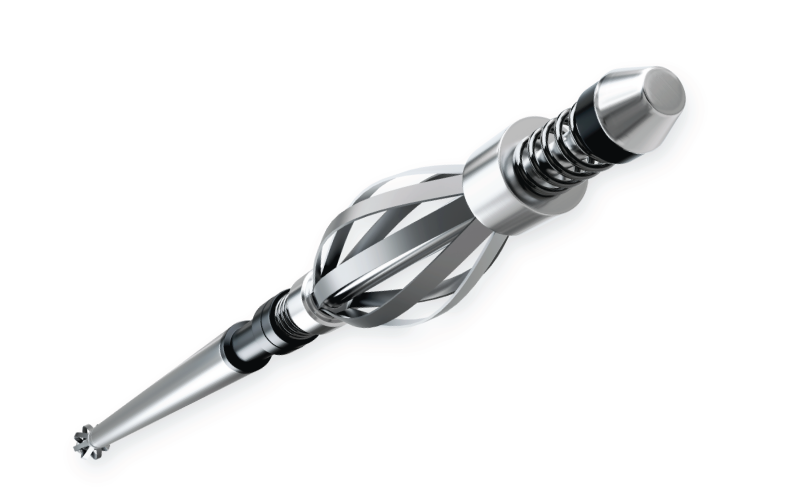
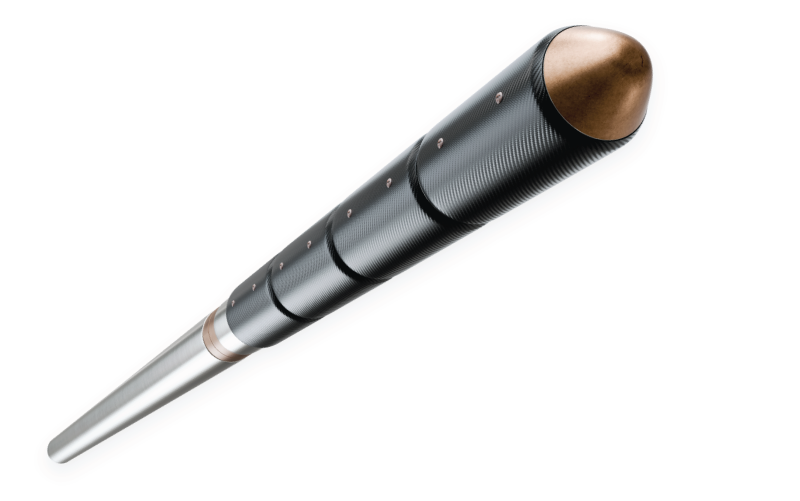
Century offers a broad suite of borehole geophysical sensors for mining, oilsands, environmental, and shallow oil and gas applications. Our team helps match the right tools to the geology, project objectives, and operating conditions to deliver reliable, decision-ready data.
Determines lithology, formation porosity, and rock mechanics by measuring accurate bulk density in real-time.
Identifies complex lithologies and computes apparent bulk density, essential for distinguishing between mineral types and evaluating porosity.
Identifies permeable beds, correlates lithology, and determines formation water salinity in fresh-water and environmental applications.
Evaluates invasion profiles and determines true formation resistivity to identify permeable zones and differentiate fluid types.
Provides precise 3D borehole trajectory and structural mapping, ensuring accurate spatial positioning of geological targets.
Calculates primary porosity, evaluates rock mechanics (compressive/shear strength), and identifies fractures via acoustic wave propagation.
Identifies active flow zones, maps fluid entry/ exit points, and evaluates aquifer yield and permeability profiles
Identifies geothermal gradients, locates fluid flow behind casing, and pinpoints water entry or gas expansion zones.
Detects disseminated sulfide mineralization and maps clay-rich zones by measuring the electrical chargeability of the formation.
Determines total and effective porosity, characterizes pore size distribution, and estimates formation permeability and fluid types.
Evaluates formation porosity and identifies gas-bearing zones by measuring the hydrogen index of the formation.
Differentiates clay types, identifies alteration zones, and correlates stratigraphy by quantifying potassium, uranium, and thorium concentrations.
Measures true formation resistivity in thin beds to identify hydrocarbon saturation, fluid contacts, and highly resistive ore bodies.
Identifies magnetite-bearing ore zones and mafic/ultramafic lithologies while continuously mapping borehole trajectory.
Determines structural dip, maps faults, and identifies sedimentary features like cross-bedding using high-resolution micro-resistivity
Maps fracture networks, identifies bedding planes, and provides high-resolution visual and acoustic structural analysis of the borehole wall.
Recovers discrete, depth-specific formation fluid samples for geochemical analysis and contamination monitoring.
Accurately plots borehole trajectory in 3D space to ensure geological targets are intersected as planned.
Maps contaminant plumes, evaluates groundwater quality, and delineates lithology in open or PVC-cased environmental wells.
Provides high-resolution borehole wall imaging to identify thin beds, vugs, fractures, and detailed sedimentary structures
Our multiparameter tools incorporate multiple sensors in a single sonde — saving runs. That means more data per pass, shorter logging time, and reduced operational costs.
shorter tools mean less overhole
every 1mm where required
ensures trusted accuracy
minimizes noise and cable interference
reduce rig time and save money
high-speed telemetry means faster logging times
Century’s tools aren’t just some of the smallest or most feature-packed in the industry — their design delivers efficiency, reliability, and cost savings.
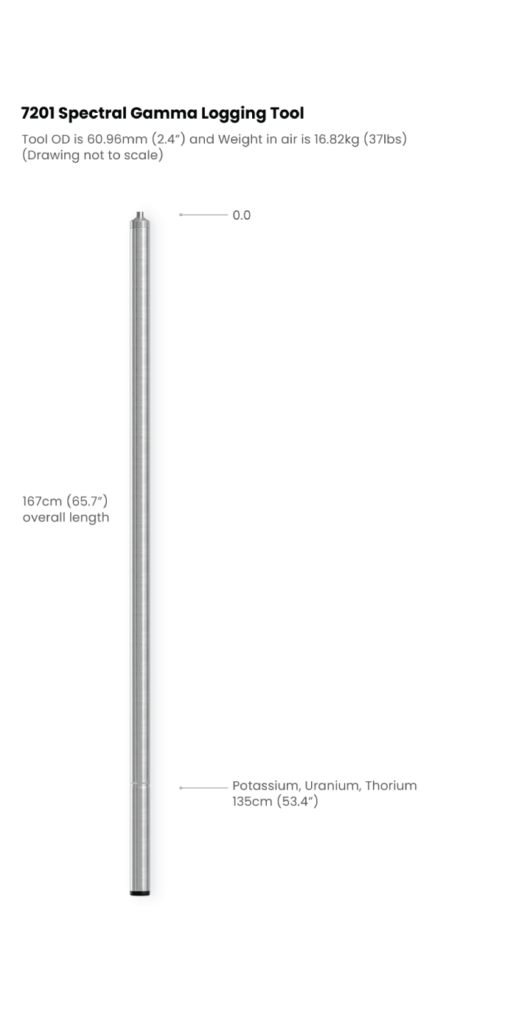
Properties Measured:
1. Potassium (K): Percent 40Offset: 135.63 cm (53.4in.)
2. Uranium (U): Parts Per MillionOffset: 135.63 cm (53.4in.)
3. Thorium (T): Offset: 135.63 cm (53.4in.)
Specifications:
Length: 167 cm (65.75in.)
Temperature: 65 C (150 F)
Diameter: 60.96 mm (2.40 in.)
Pressure: 232 kg/cm2 (3000 PSI)
Weight: 16.82 kg (37 lb.)
Logging Speed: 1.5 m/min. (5 ft./min.)
Tool Voltage Required: 60 VDC
Tool #:7201
Part #:272000
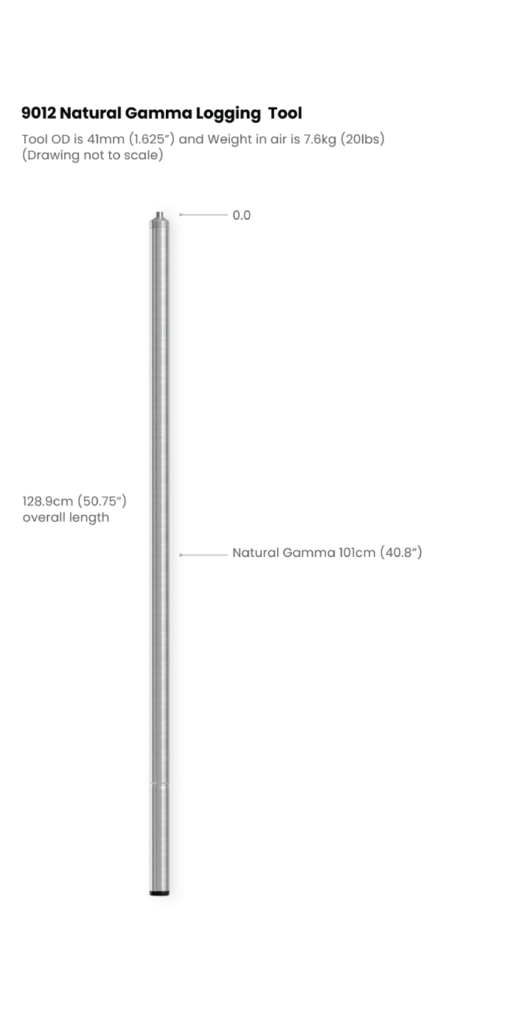
Used when the natural gamma log is required. This tools slim design permits logging in small diameter boreholes and through steel or PVC drill pipe of 2 inch inside diameter or larger. The sensor is located near the bottom of the tool to permit data acquisition near the total depth of the borehole. This tool can also be used with a spacer and gamma source to record 4 p density.
Properties Measured:
Natural Gamma: 2.2 x 10.2 cm (0.875 x 4.0 in.)
NAI Scintillation
Offset: 101 cm (40.8 in.)
Specifications:
Length: 128.9 cm (50.75 in.)
Temperature: 85 C (185 F)
Diameter: 41 mm (1.625 in.)
Pressure: 281 kg/cm2 (4000 PSI)
Weight: 7.46 kg (20 lb.)
Logging Speed: 9 m/min. (30 ft./min.)
Tool Voltage Required: 36 VDC Sensor
Response Ranges Sensor Response Limits Accuracy Natural Gamma (NG) 0 – 400,000 API units +/-5%
TOOL#: 9012
Part #: 318400
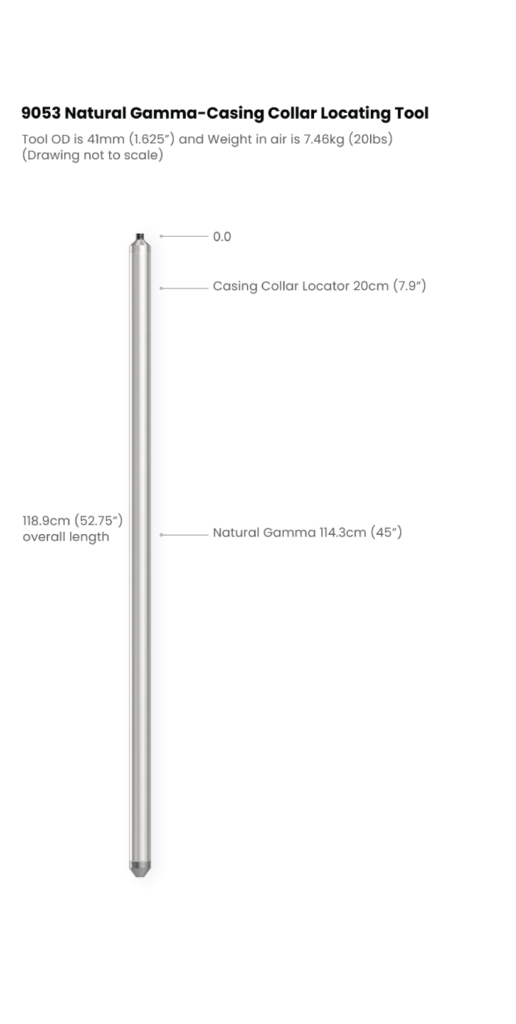
Used when the natural gamma log and casing collar locator are required. This tool’s slim design permits logging in small diameter boreholes and through steel or PVC drill pipe of 2-inch inside diameter or larger. The natural gamma sensor is located near the bottom of the tool to permit data acquisition near the total depth of the borehole.
Benefits:
Fully downhole digital
Quick automatic setup, unique tool identification
Designed for one-man operation
Can be customized to your specific needs
Features:
Properties Measured:
Casing Collar Locator
Magnetic Coil
Offset: 20 cm (7.9 in.)
Natural Gamma:
2.2 x 10.2 cm (0.845 x 4.0 in.)
NAI Scintillation
Offset: 114.3 cm (45 in.)
Specifications:
Length: 118.9 cm (52.75 in.)
Temperature: 85C (185F)
Diameter: 41 mm (1.625 in.)
Pressure: 281 kg/cm2 (4000 PSI)
Weight: 7.46 kg (20 lb.)
Logging Speed: 9 m/min. (30 ft./min.)
Tool Voltage Required: 36 VDC
Tool #:9053
Part #:340500B
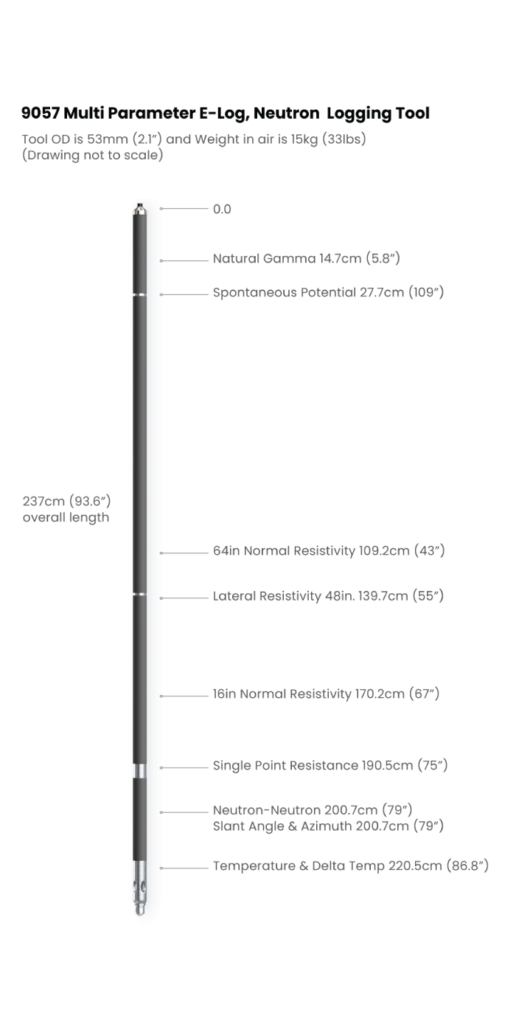
The Multi-Parameter E-Log, Neutron logging tool was developed to replace the
9055 which was historically Century’s most popular tool. The tool duplicates all parameters on the 9055 while adding the 16 inch normal, 64 inch normal, and lateral resistivities. The 9057 natural gamma circuit features a low dead time and the ability to measure very high count rates making it a favorite for uranium logging. The tool records ten different parameters simultaneously in
one pass of the borehole. The ten parameters are the following: natural gamma, spontaneous potential, single point resistance, 16 in. normal resistivity, 64 in. normal resistivity, 48 in. lateral resistivity, neutron-neutron, temperature, delta temperature, slant angle(tilt) and azimuth (bearing). Slant angle, azimuth, and natural gamma are optional.
Properties Measured:
Natural Gamma: 2.2 x 10.16 cm
(0.875 x 4.0 in.)
NaI Scintillation
Offset: 14.7 cm (5.8 in.)
64 in. Normal Resistivity: Offset: 109.2 cm (43 in.)
16 in. Normal Resistivity: Offset: 170.2 cm (67 in.)
Neutron-Neutron: He 3 Detector 2.54 cm x 15.2 cm (1 in. x 6 in.)
Offset: 200.7 cm (79 in.)
Lateral Resistivity 48 in.
Offset: 139.7 cm (55 in.)
Spontaneous Potential: +/- 0.1 mv resolution
Offset: 27.7 cm (10.9 in.)
Single Point Resistance: +/- 0.1 ohm resolution
Offset: 190.5 cm (75 in.)
Temperature & Delta Temperature:0.004 C (0.007 F) resolution
Offset: 220.5 cm (86.8 in.)
Slant Angle & Azimuth:3-axis magnetometer and 2-axis inclinometer
Offset: 200.7 cm (79 in.)
Specifications:
Length: 237 cm (93.6 in.)
Temperature: 80 C (176 F)
Diameter: 53 mm (2.1 in.)
Pressure: 281 kg/cm2 (4000 PSI)
Weight: 15 kg (33 lb.)
Logging Speed: 9 m/min. (30 ft./min.)
Tool Voltage Required: 36 VDC

Properties Measured:
Natural Gamma: 2.2 x 102 mm (0.875 x4.0 in.)NAI Scintillation
Offset: 13.5 cm (5.3 in.)
Neutron-NeutronHe3 Detector25.4 mm x 152 mm (1in. x 6 in.)
Offset: 217.5 cm (85.6 in.)
TemperatureOffset: 220.4 cm (86.8 in.)
Slant Angle & Azimuth: 3-axis magnetimeter and 2-axis inclinometer
Offset: 213.3 cm (84 in.) Length: 243 cm (96 in.)
Specifications:
Temperature: 80 C (176 F)
Diameter: 42 mm (1.625 in.)
Pressure: 292 kg/cm2 (4000 PSI)
Weight: 12.0 kg (25 lb.)
Logging Speed: 9 m/min. (30 ft./min.)
Tool Voltage Required: 36 VDC
TOOL#: 9058
Benefits:
Fully downhole digital
Quick automatic setup, unique tool identification
Designed for one-man operation
Can be customized to your specific needs
Features:
Properties Measured:
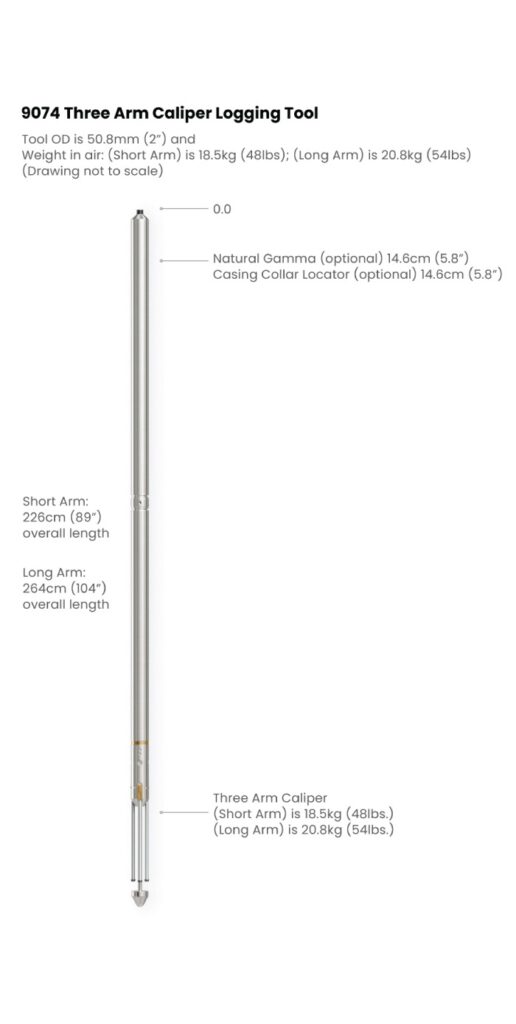
Natural Gamma: (optional)
2.2 x 10.16 cm (0.875 x 4.0 in.)
NaI Scintillation
Offset: 14.6 cm (5.76 in.)
Casing Collar Locator: (optional)
Dual magnet and coil assembly Offset: 14.6 cm (5.76 in.)
Three Arm Caliper:
Short- or Long- arm configuration, motor operated
Sensor Offset:Short-arm: 220.4 cm (86.8 in.)
Long-arm: 241.0 cm (94.9 in.)
Specifications:
Tool Length:
With Short-arms: 226 cm (89 in.)
With Long-arms: 264 cm (104 in.)
Temperature: 85C (185F)
Diameter: 50.8 mm (2.0 in.)
Pressure: 281 kg/cm2 (4000 PSI)
Weight:
Short-arm: 18.5 kg (48 lbs.)
Long-arm 20.8 kg (54 lbs.)
Logging Speed: 9 m/min. (30 ft./min.)
Tool Voltage Required: 56 VDC
Tool #:9074
Part #:298000A
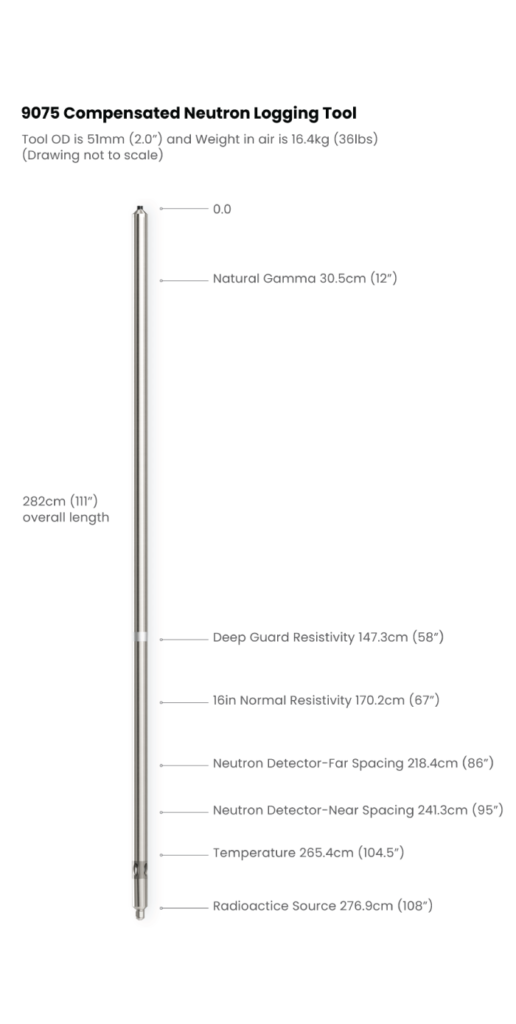
The Compensated Neutron tool contains a two detector, neutron system which uses a 5.0 Curie, Am241Be source to record neutron porosity of the formation. Additionally, the tool also records short and long neutron counts, natural gamma, temperature and a deep guard resistivity.
Properties Measured:
Natural Gamma:2.9 x 10.2 cm (1.125 x 4.5 in.)NaI Scintillation
Offset: 30.5 cm (12 in.)
Deep Guard Resistivity:Upper guard, measure and lower guard electrodes, 3 m (10 ft.)Offset for measure electrode:147.3 cm (58 in.)
Neutron Detector, Far Spacing: He3 5.1 x 25.4 cm (2 x 10 in.)61cm (24 in.) spacingOffset: 218.4cm (86 in.)
Neutron Detector, Near Spacing:He3 2.9 x 10.1 cm (1.125 x 4.0 in.)32.4 cm (12.75 in.) spacingOffset: 241.3cm (95 in.)
Temperature Measurement:Thermal temperature on needle sensor.
Offset: 265.4 cm (104.5 in.)
Radioactive Source:5 Ci AmBe 241 neutron source, bullplug
Offset: 276.9 cm (108 in.)
Specifications:
Length: 282 cm (111 in.)
Temperature: 85 C (185 F)
Diameter: 5.1 cm (2.0 in.)
Pressure: 232 kg/cc (3300 PSI)
Weight: 16.4 kg (36 lb.)
Logging Speed: 9 m/min. (30 ft./min.)
Tool Voltage Required: 70 VDC
TOOL#: 9075

Deviation information is valuable in mine planning and subsurface mapping. The gyroscopic device is used for measuring deviation through steel drilling rods or casings and in open holes where magnetic rocks occur. The digital solid state design uses a continuous reading gyroscope (modified Goodrich, or WellNav), with information recorded at operator selectable sample intervals. It is not necessary to stop to take station data. Natural Gamma and Magnetic Azimuth are optional. All software to process survey data (including drift corrections) is included in the Log and Display programs which is included with the System VI logging system.
Properties Measured:
Natural Gamma (optional):2.2 x 10.2 cm (0.875 x 4.0 in.)NaI Scintillation
Offset: 29.7 cm (11.7 in.)
Tilt measurement:X-Y Inclinometers
Offset: 31.2 cm (79.2 in.)
Gyro: Mechanical 2 degrees of freedom
Offset: 224 cm (88.2 in.) Sold Separately.
X-Y-Z Magnetometer (optional):
Offset: 31.2 cm (79.2 in.)
Specifications:
Length: 242.6 cm (95.5 in.)
Temperature: 85 C (185 F)
Diameter: 42 mm (1.63 in.) (upper) 45 mm (1.75 in.) (lower)
Pressure: 232 kg/cm2 (3300 psi)
Weight: 13.4 kg (29.5 lb.)
Logging Speed: 15 m/min. (50 ft./min.)
Tool Voltage Required: 60 VDC
Accessories Required: Landing Table & Legs, Sighting Scope, Gyro Surface Power Supply, Switching Box, and SRG GyroLogging Cable Requirements: 4 Conductor
TOOL# 9098
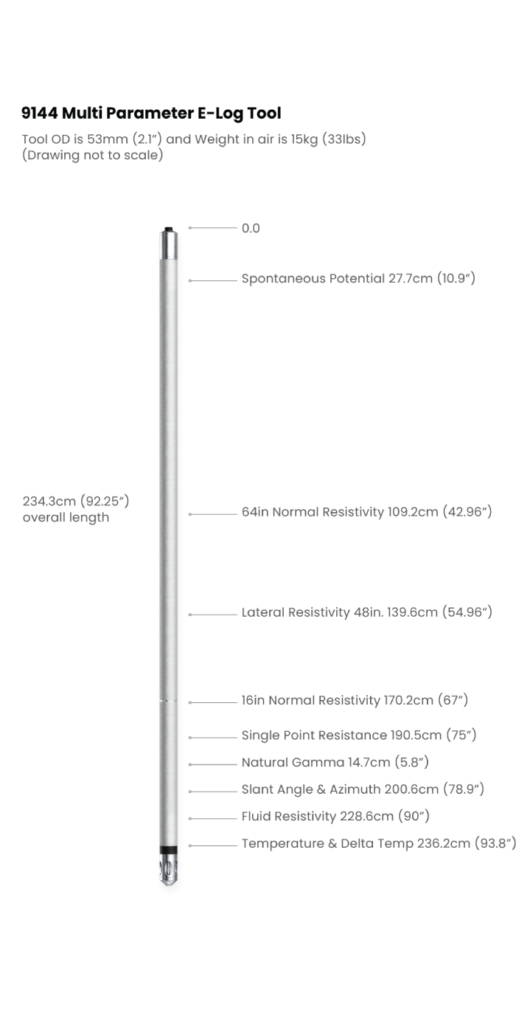
The Multi-Parameter E-Log tool is a multi-parameter resistivity tool primarily used for water well logging and monitoring wells. The tool records ten different
parameters simultaneously in one pass of the borehole. The ten parameters are the following: natural gamma, spontaneous potential, single point resistance, 16 in. normal resistivity, 64in. normal resistivity, 48 in. lateral resistivity, fluid resistivity, temperature, delta temperature, slant angle (tilt) and azimuth (bearing). Slant angle, bearing, and natural gamma are optional.
Properties Measured:
Natural Gamma: (optional)2.5 x 10.2 cm (1.0 x 4.0 in.)NAI Scintillation
Offset: 198.1cm (78.0 in.)
64 in. Normal Resistivity:
Offset: 119.1 cm (42.96 in.)
16 in. Normal Resistivity:
Offset: 170.1 cm (66.96 in.)
Fluid Resistivity:
Offset: 228.6 cm (90.0 in.)
Lateral Resistivity 48 in.
Offset: 139.6 cm (54.96 in.)
Spontaneous Potential:
Offset: 27.7 cm (10.9 in.)
Single Point Resistance:
Offset: 190.5 cm (75.0 in.)
Temperature & Delta Temperature:
0.074 C (0.007 F) resolution
Offset: 236.2 cm (93.0 in.)
Slant Angle & Bearing: (optional)
3-axis magnetometer and 2-axis inclinometer
Offset: 200.6 cm (78.964 in.)
Specifications:
Length: 244 cm (96 in.)
Temperature: 70 C (158 F)
Diameter: 53 mm (2.1 in.)
Pressure: 281 kg/cm2 (4000 PSI)
Weight: 15 kg (33 lb.)
Logging Speed: 9 m/min. (30 ft./min.)
Tool Voltage Required: 36 VDC
TOOL#: 9144
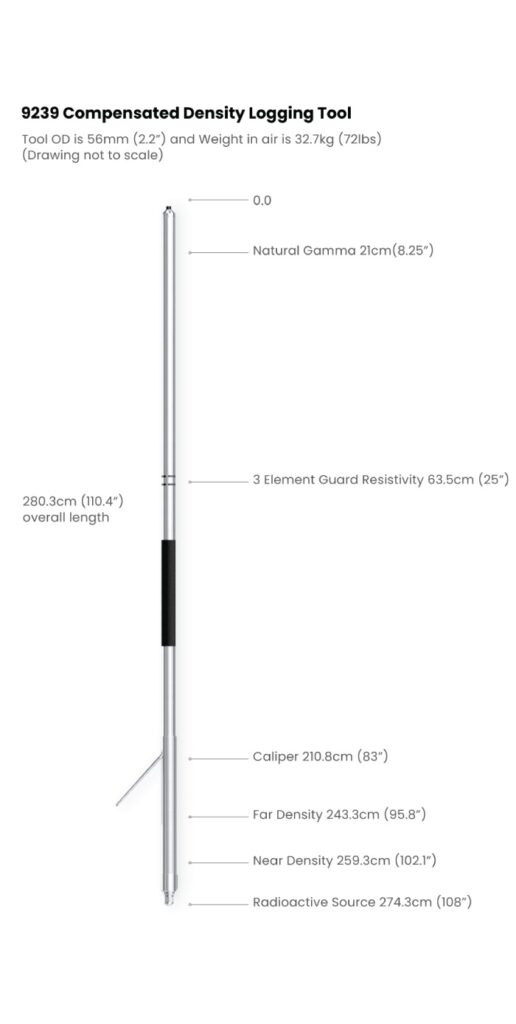
The Series 9239, Compensated Density logging tool uses the two focused density detectors to compute borehole compensated density in real time while logging. No post-processing required to produce CDL bulk density. Additionally, the tool also records natural gamma, caliper, and focused guard resistivity
Properties Measured:
Natural Gamma: 2.2 x 10.16 cm (0.875 x4.0 in.)NAI Scintillation
Offset: 21 cm (8.25 in.)
3-Element Guard Resistivity:127.6 mm (50.25 in.) guard electrode
Offset: 63.5 cm (25 in.)
Caliper: Motorized, uphole actuated35.6 cm (14 in.) or 20.3 cm (8 in.)
Offset: 210.8 cm (83 in.)
Far Density:2.2 x 10.16 cm (0.875 x4.0 in.)35.8 cm (14.1 in.) spacing
Offset: 243.3 cm (95.8 in.)Near Density:2.2 x 3.2 cm (0.875 x1.25 in.)20 cm
(7.9 in.) spacingOffset: 259.3 cm (102.1 in.)
Radioactive source: 200-300 mCi Cesium 137 in bullplug
Offset: 274.3 cm (108.0 in.)
Specifications:
Length:280.3 cm (110.35 in.)
Temperature: 85 C (185 F)
Diameter: 56 mm (2.2 in.)
Pressure: 175 kg/cm2 (2500 PSI)
Weight: 32.7 kg (72 lb.)
Logging Speed: 9 m/min. (30 ft./min.)
Tool Voltage Required: 56 VDC
TOOL#: 9239
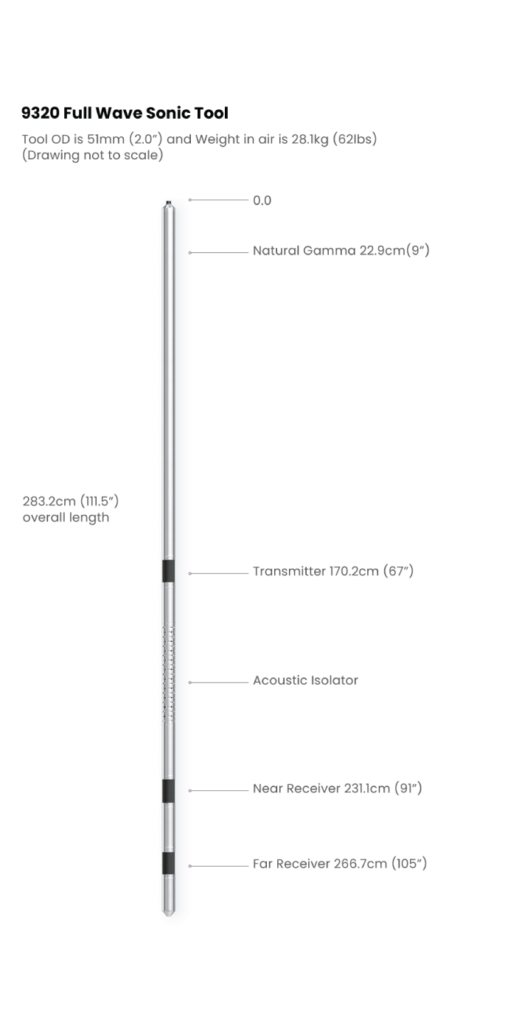
The Full Wave Sonic tool contains a single transmitter and dual receiver to record formation travel times. The full wave form data is also recorded simultaneously, along with near and far travel times, borehole-compensated delta time, calculated sonic porosity, receiver gains, near/far amplitudes and natural gamma. The sonic or acoustic log uses the basic principle of sound waves traveling through a media. The Century sonic system uses a single transmitter and dual receiver system for recording the travel times of the formation. The receivers are spaced approximately 2 and 3 feet, from the transmitter. Therefore, a 0.3m (1 ft.) calculation can be made to measure this interval transit time. Additionally, the 9320 can be upgraded for cement bond logging, by adding a casing collar locator (see below for link).
Properties Measured:
Natural Gamma:Mechanical Centralizer 2.5 x 10.2 cm(1.0 x 4.0 in.) NaI Scintillation
Offset: 22.9 cm (9 in.)
Transmitter:24 khz. piezoelectric
Offset: 170.2 cm (67 in.)
Acoustic Isolator: Thermoplastic polyester
Offset: N/A
Near Receiver: (2 ft.) spacing
Offset: 231.1 cm (91 in.)
Far Receiver: (3 ft.) spacing
Offset: 266.7 cm (105 in.)
Specifications:
Length: 283.2 cm (111.5 in.)
Temperature: 85 C (185 F)
Diameter: 50.8 mm (2.0 in.)
Pressure: 175 kg/cm2 (2500 PSI)
Weight: 22.7 kg (50 lb.)
Logging Speed: 9 m/min.@0.06 SI (30 ft./min. @ 0.2 ft. SI)
Tool Voltage Required: 85 VDC
TOOL# 9320
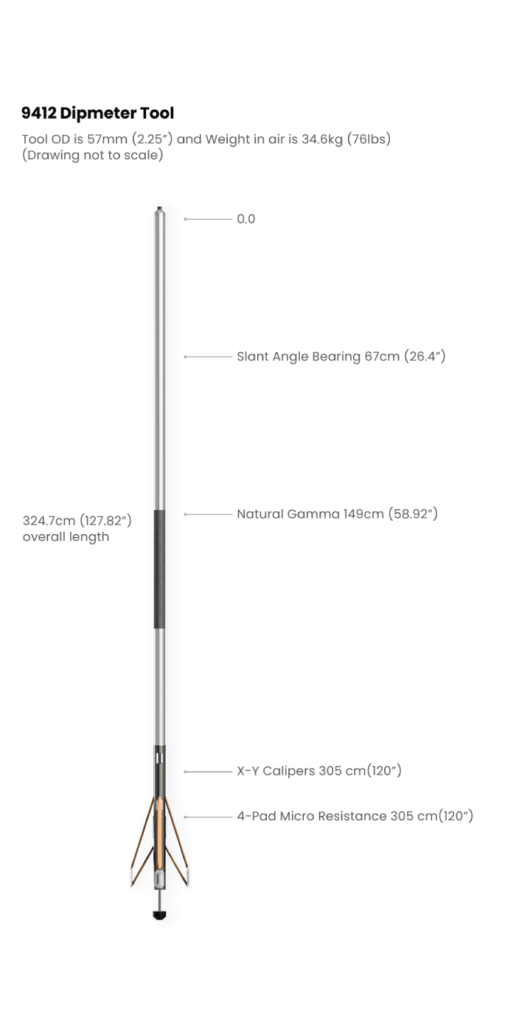
The Dipmeter tool is a formation strike and dip directional probe primarily used in mining and environmental logging applications. Additionally, the tool also records natural gamma, X-Y calipers, and borehole deviation is computed from the slant angle and bearing measurements calculated from the inclinometer and magnetometer sensors. To ensure accurate strike and dip measurements in small-diameter holes, special care should be taken when calibrating the calipers to maximize their accuracy.
Properties Measured:
Natural Gamma: 2.2 x 8.9 cm (0.875 x 3.5 in.)NaI (TI) Scintillation
Offset: 14 cm (5.5 in.)
Slant Angle Bearing: Offset: 67 cm (26.4 in.)
Independent X-Y Calipers: Maximum 30 cm (12 in.) Hole Diameter
Offset: 305 cm (120 in.)
4-pad Micro Resistance: Offset: 305 cm (120 in.)
Specifications:
Length: 323 cm (127 in.)
Temperature: 85 C (185 F)
Diameter: 57 mm (2.25 in.)
Pressure: 352 kg/cm2 (5000 PSI)
Weight: 34.6 kg (76 lb.)
Logging Speed:
Maximum: 5.5 m/min. (18 ft./min.)
Minimum: 2.7 m/min. (9 ft./min.)
Tool Voltage Required: 115 VDC
TOOL#: 9411
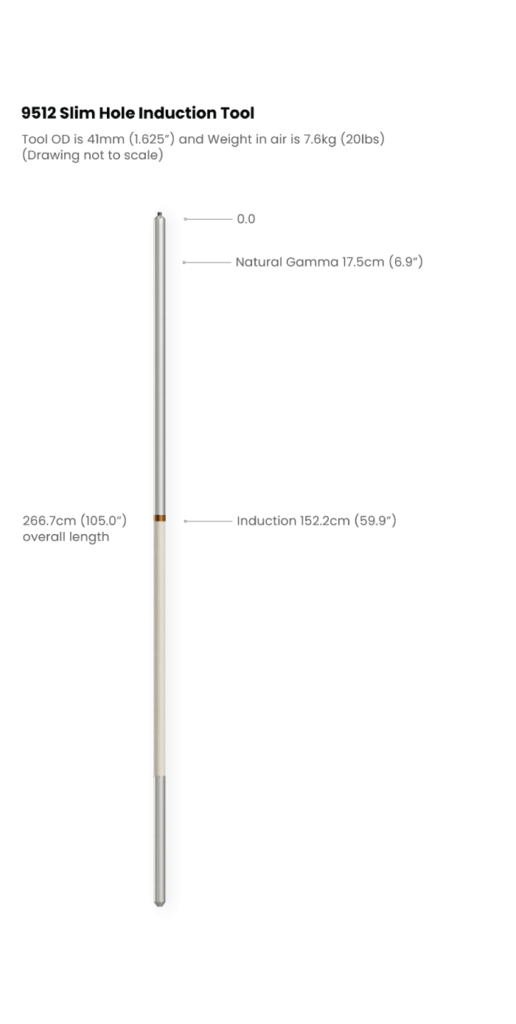
This three-coil slim hole induction tool was designed to provide conductivity and converted resistivity logs in open boreholes or PVC/plastic cased holes with casing sizes 5.08 cm (2 in.) or greater. The probe measures the rock conductivity in borings and wells within a zone of 25.4 to 127 cm (10 to 50 in.) from the well, but is not sensitive to the borehole fluid, casing, or grouting materials. The tool can also be used in air-filled holes to measure the conductivity response. In addition, the tool also simultaneously records natural gamma ray in API units or CPS for determination of clay content and radioactivity measurements.
Properties Measured:
Natural Gamma: 2.2 x 10.2 cm (0.875 x 4.0 in.)NaI Scintillation
Offset: 17.5 cm (6.9 in.)
Induction: Coil-focused conductivity 3-Coil Conductivity Electrodes
Offset: 152.2 cm (59.9 in.) Main Coil Spacing: 50.0cm (20 in.)
Specifications:
Length: 266.7 cm (105.0 in.)
Temperature: 70 C (158 F)
Diameter: 41 mm (1.625 in.)
Pressure: 281 kg/cm2 (4000 PSI)
Weight: 7.46 kg (20 lb.)
Logging Speed: 9 m/min. (30 ft./min.)
Tool Voltage Required: 30 VDC
TOOL# 9512
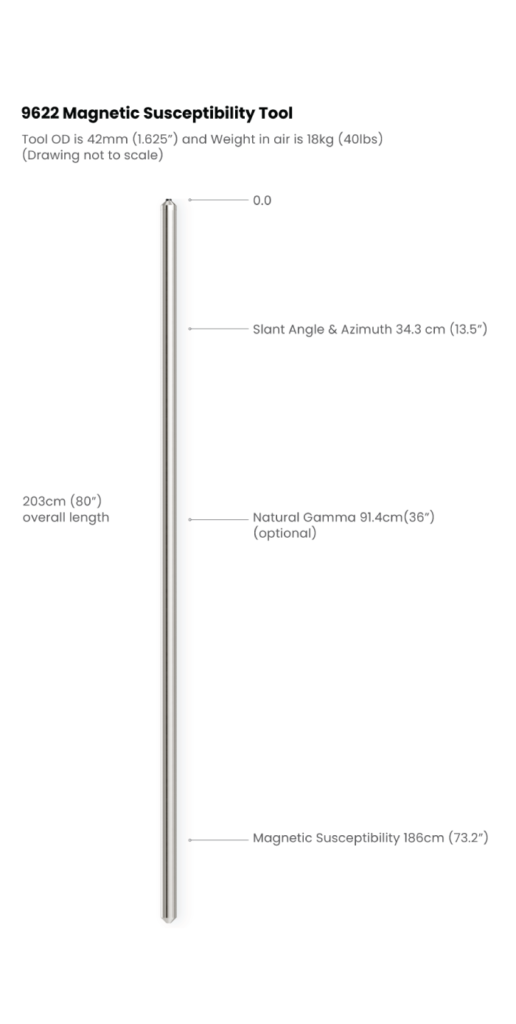
The Magnetic Susceptibility tool is a slim hole mining tool primarily designed to measure the magnetic susceptibility of the formation. Additionally, optional natural gamma, inclinometer, and magnetometer sensors can be included
Properties Measured:
Natural Gamma: (optional) 2.2 x 10.2 cm (0.875 x 4 in.)Scintillation Crystal Offset: 91.4 cm (36 in.)
Magnetic Susceptibility: Dual-focused coils, 1.44 kHz operating frequency10.2 cm (4 in.) resolution vertically and horizontally
Offset: 186 cm (73.2 in.)
Slant Angle and Azimuth Measurements: 3-axis magnetometer 2-axis inclinometer Offset: 34.3 cm (13.5 in.)
Specifications:
Length: 203 cm (80 in.)
Temperature: 70 C (158 F)
Diameter: 4.1 cm (1.63 in.)
Pressure: 253 kg/cm2 (3600 PSI)
Weight: 18 kg (40 lb.)
Logging Speed: 9 m/min. (30 ft./min.)
Tool Voltage Required: 36 VDC
TOOL#: 9622
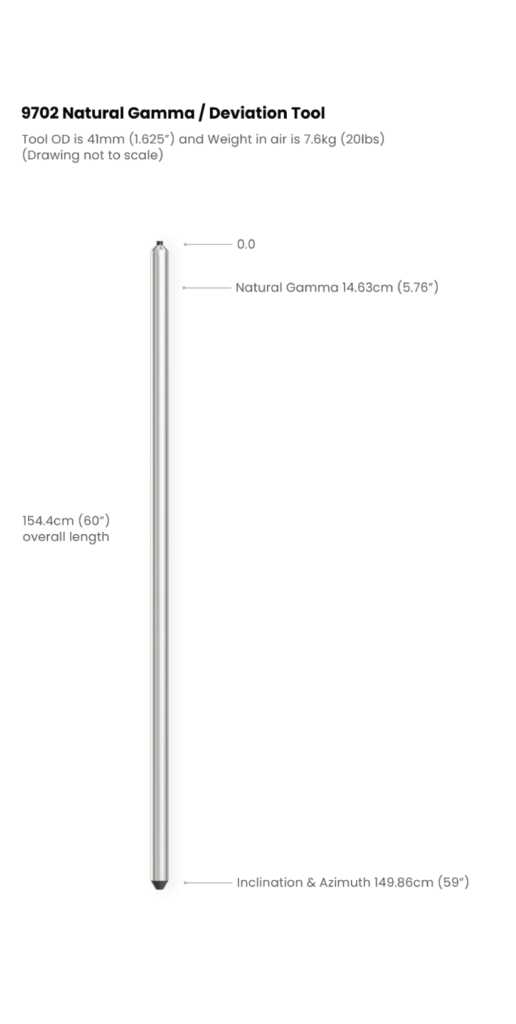
Used when natural gamma log and deviation data is required. The natural gamma sensor is located near the bottom of the tool to permit data acquisition near the total depth of the borehole. The deviation device uses two inclinometers and three magnetometers to determine precise borehole path and direction. The small diameter (41 mm / 1.625 in) of the tool allows logging in 2.0 ID PVC casing, non-metallic casings, or open holes. The deviation test stand is recommended for both calibration of the device and routine tool checks for accuracy.
Properties Measured:
Natural Gamma:2.2 x 10.2 cm (0.875 x 4.0 in.) NAI Scintillation
Offset: 139.7 cm (55 in.)
Inclination & Azimuth: 2-axis Inclinometer and 3-axis Magnetometer. Offset: 38.1 cm (15 in.)
Specifications:
Length: 154.4 cm (60.0 in.)
Temperature: 85 C (185 F)
Diameter: 41 mm (1.625 in.)
Pressure: 281 kg/cm2 (4000 PSI)
Weight: 7.46 kg (20 lb.)
Logging Speed: 9 m/min. (30 ft./min.)
Tool Voltage Required: 36 VDC
TOOL#: 9702
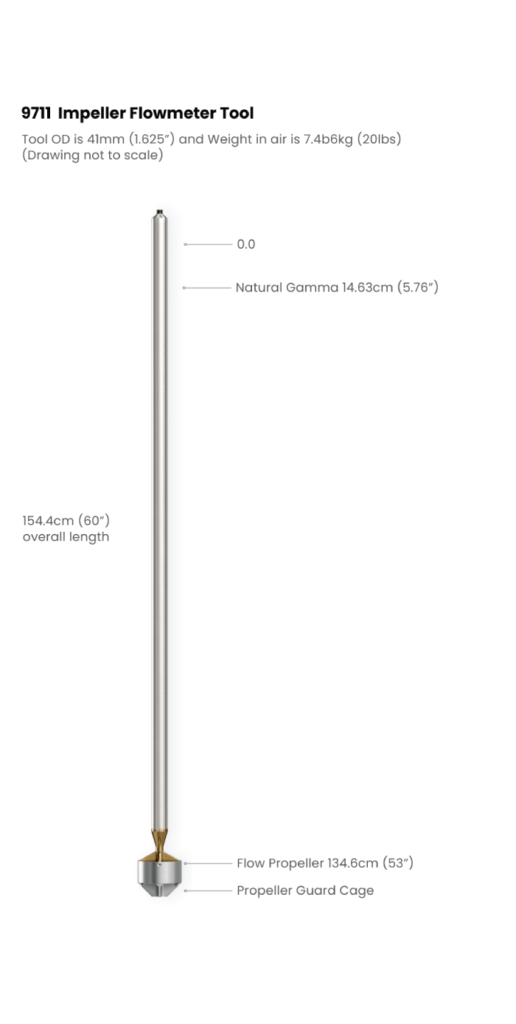
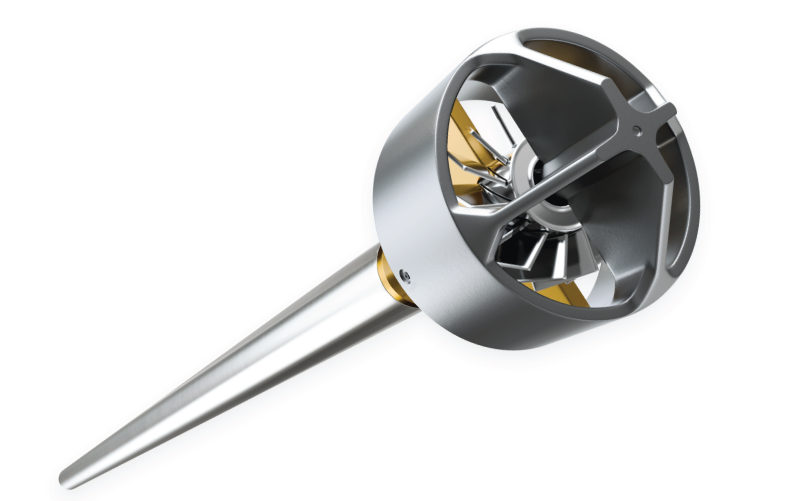
Continuous velocity flowmeter logs are used to measure the fluid flow rates in open and cased wells. Logs can be run in the up or down direction, with or without the well producing water. Century’s impeller flowmeter uses a magnetic coupling between the sensing device and the electronics so that borehole fluids cannot enter the tool and injected oil is no longer necessary. Internally, a 256-pulse-per-revolution optical encoder records the impeller turns, minimizing statistical problems of other tools. With this low-friction design, low flow rates of less than 0.8 liters per second (3 gallons per minute) can be measured. The tool is configured with a 114 mm (4.5 in.) shroud. An 89 mm (3.5 in.) shroud is also available. Natural gamma is optional.
Properties Measured:
Natural Gamma: (optional) 2.2 x 10.16 cm (0.875 x 4.0 in.)NaI Scintillation
Flow Propeller: Offset: 134.6 cm (53 in.)
Propeller Guard Cage:
Specifications:
Length: 152.4 cm (60 in.)
Temperature: 75 C (167 F)
Diameter: 4.1 cm (1.625 in.)
Pressure: 176 kg/cm2 (2500 PSI)
Weight: 7.3 kg (16 lb.)
Logging Speed: 15 to 18 m/min. (60 ft./min.)
Tool Voltage Required: 16 VDC
TOOL#: 9711
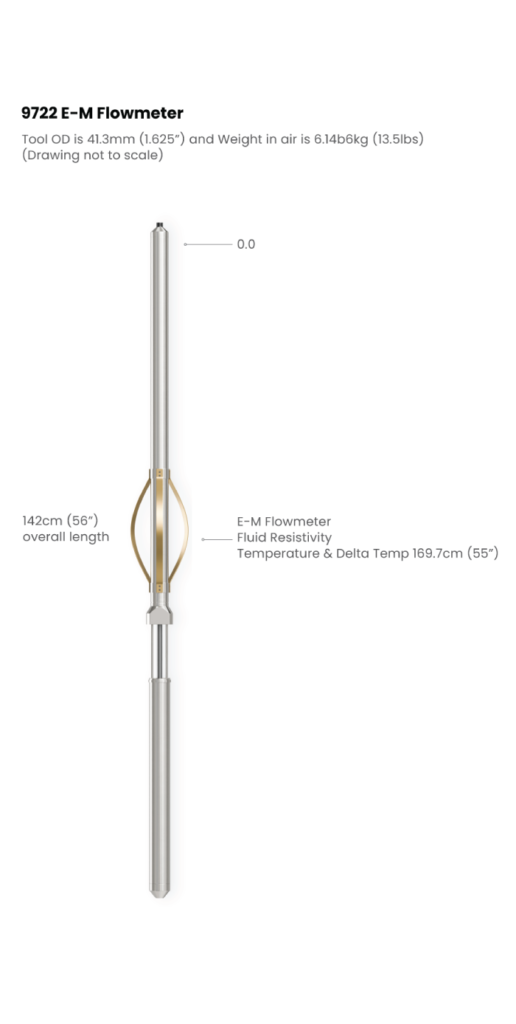
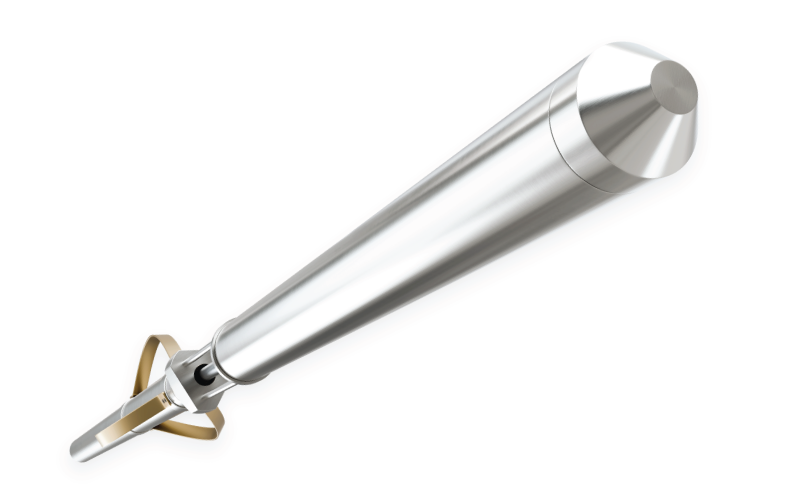
The E-M Flowmeter tool is used in the environmental and hydrology industries to measure fluid movement in a borehole. It incorporates Quantum Engineering’s “EBF” electromagnetic sensor. The instrument measures flow rates using the principle of Faraday’s Law of Induction. The downhole probe consists of an electromagnet and two electrodes located 180 degrees apart and 90 degrees to the magnetic field inside a hollow cylinder. The voltage induced by a conductor moving at right angles through the magnetic field is directly proportional to the velocity of the conductor (water) through the field.
The tool is capable of measuring low velocity flow rates down to less than 50 ml/min and increased flow rates up to 40 liters/min through the tool’s 1-inch inside diameter sensor. When using the tool to measure low velocity flow rates, a rubber skirt is attached to the outside of the sensor to block off the borehole and force the fluid to pass through the 1-inch diameter opening inside the sensor coil. The Compu-View Software program is designed to allow the automatic collection of data at selected static stations in the borehole. When measuring faster flow rates, the rubber skirt is typically removed and the tool is run in either static station or dynamic mode. The tool has no moving parts.
Properties Measured:
Flowmeter: Electromechanical
Offset: 139.7 cm (55.0 in.)
Fluid Resistivity: Offset: 139.7 cm (55.0 in.)
Temperature & Delta Temperature : Offset: 139.7 cm (55.0 in.)
Specifications:
Length: 142 cm (56.0 in.)
Temperature: 60 C (140 F)
Diameter: 41.3 mm (1.625 in.)
Sensor Housing: 50.8 mm (2.0 in.)
Weight: (13.5 lbs.)
Tool Voltage Required: 64 VDC
TOOL# 9722
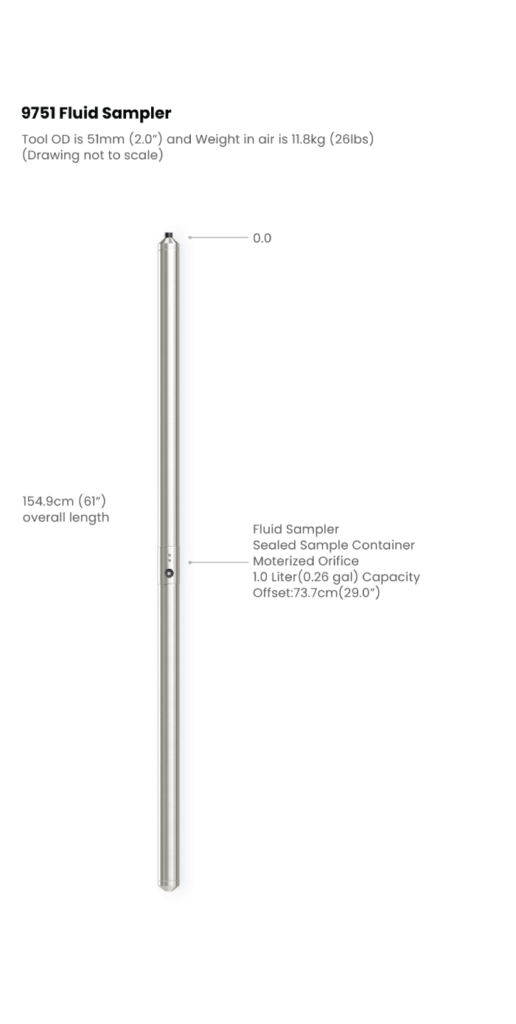
This tool can be used to obtain 1 liter fluid samples downhole
Properties Measured:
Fluid Sampler:Sealed sample container, motorized orifice1.0 liter (0.26 gal) capacity standard
Offset: 73.7 cm (29.0 in.)
Specifications:
Length: 154.9 cm (61.0 in.)
Temperature: 50 C (122 F)
Diameter: 5.1 cm (2.0 in.)
Pressure: 232 kg.m2 (3000 psi)
Weight: 11.8 kg (26 lbs.)
TOOL#: 9751
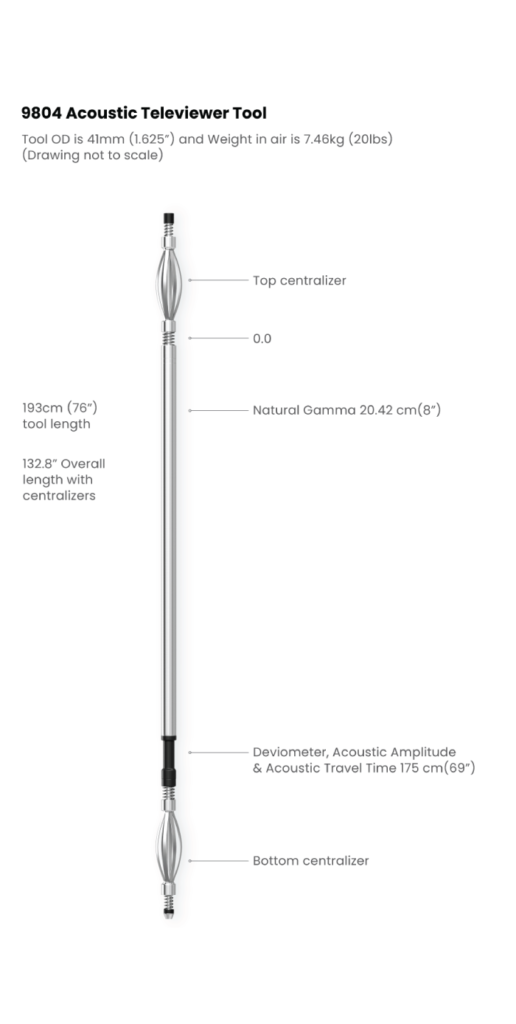
The Acoustic Televiewer takes an oriented “picture” of the borehole using high-resolution sound waves. This acoustic picture is displayed in both amplitude and travel time. This information is used to detect bedding planes, fractures, and other hole anomalies without the need to have clear fluid filling the boreholes.
The televiewer digitizes 256 measurements around the borehole at each high-resolution sample interval (0.005 meters / 0.02 feet). This data is oriented to North and displayed in real time while logging using the Visual Compu-Log software. Analysis includes color adjustment, fracture dip and strike determination, and classification of anomalies. It allows information to be displayed on the graphical screen, plot, and in report format. Optionally, the tool can be equipped with a natural gamma sensor.
Properties Measured:
Natural Gamma: Offset: 30.48 cm (12 in.) Scintillation (NG):0 to 10,00 API, Accuracy +/-5 percent
Deviometer: Offset: 175 cm (69 in.) X-Y Inclinometer (XYI): 0 to 90 degrees, Accuracy +/-0.5 degreesAzimuth (AZ):3-axis magnetometer 0 to 360 degrees, Accuracy +/- 2 degrees
Acoustic Amplitude & Acousitic Travel Time:Offset: 175 cm (69 in.), Accuracy +/- 2.55 mm (0.1 in.)
Specifications:
Outside Diameter 50.8 mm (2 in.)
Weight: 14 kg (30 lbs.)
Length: 193 cm (76.0 in.)
Pressure: 105 kg/cm2 (1500 psi)
Temperature: 85 C (185 F)
Scan Rate: 12 revolutions/second
Sample Rate: 256 samples/revolutions
Borehole Size: 74 to 230 mm (2.9 to 9 in.)
Logging Speed: 2 m/min (6 ft/min.)Length: 142 cm (56.0 in.)
Tool Voltage Required: 115 VDC
TOOL#: 9804
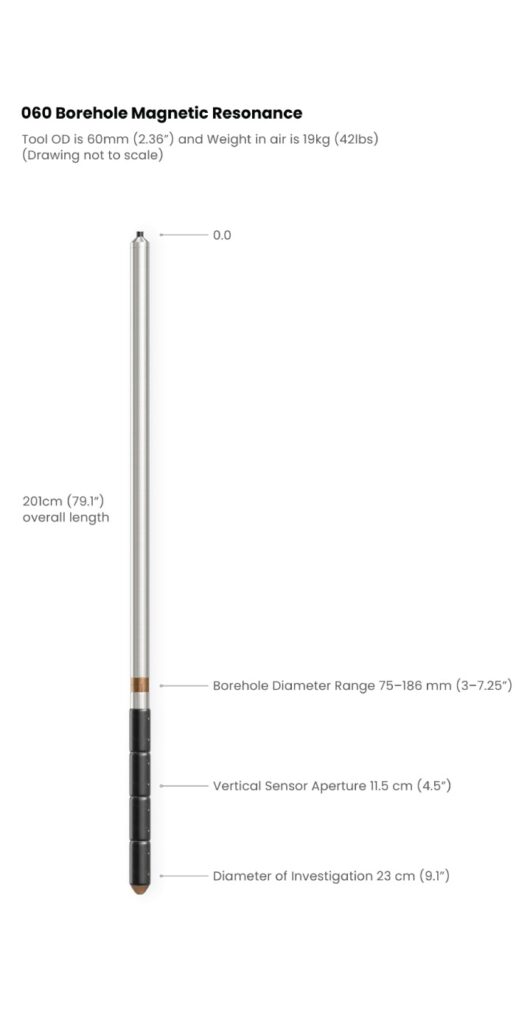
Borehole Magnetic Resonance (BMR) is an advanced geophysical logging tool. This tool provides an accurate characterization of pore structure in the subsurface by measuring signals from magnetic resonance. This measurement can distinguish fluid types and determine rock porosity, fluid content, and permeability.
Features & Benefits
NMR technology provides benefits to many industries. Due to high demand and the value of the measurements, Mount Sopris has partnered with NMR Services Australia (NMRSA) to offer a smaller borehole magnetic resonance tool for other industries that operate in slim boreholes. The NMR downhole tool has many benefits for your logging application.
Specifications – QL40-BMR60
Operating Conditions
Tool #: 060